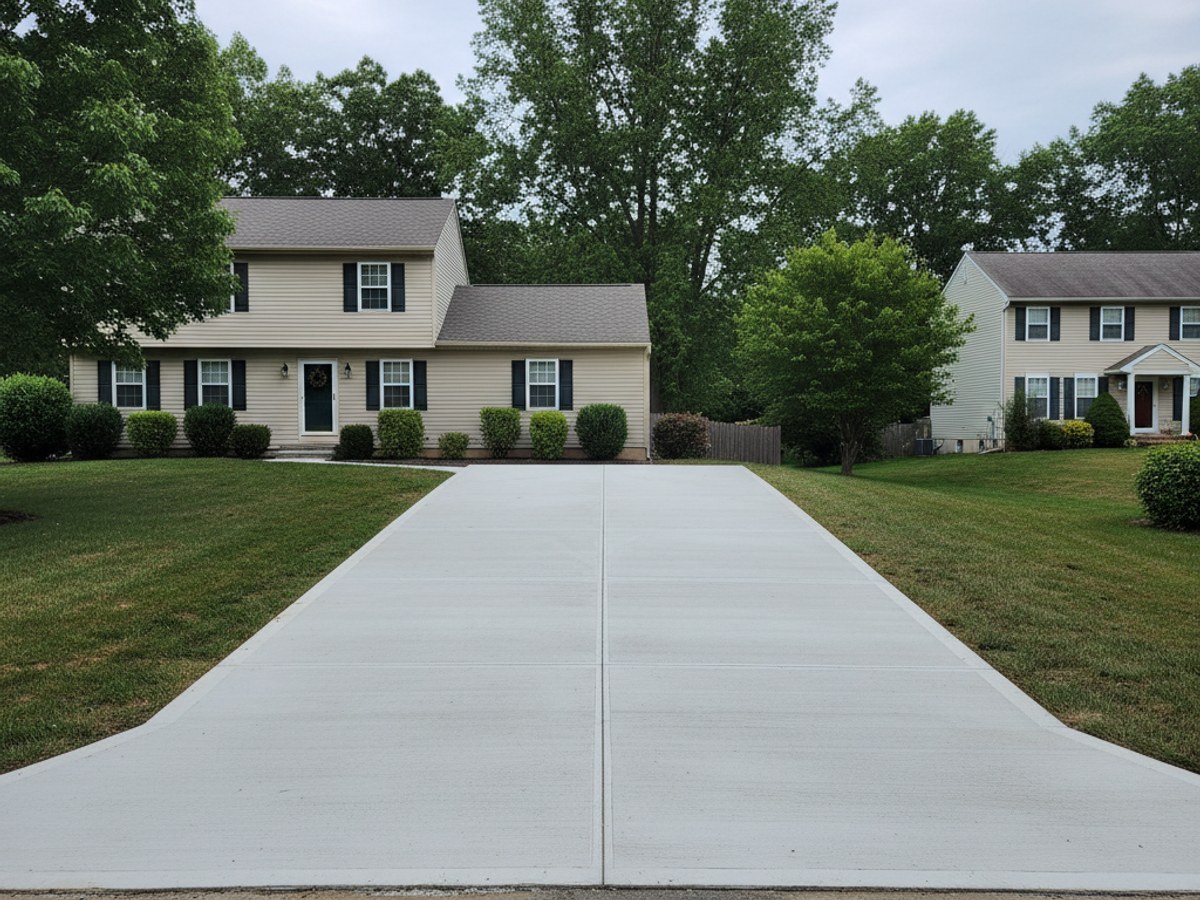
Concrete work looks simple from the sidewalk. Pour it, screed it, let it sit. What actually decides whether a driveway lasts 25 years or cracks apart in five happens underground and in the first 48 hours, and most of that is invisible by the time you're writing the check. Here's what to actually check before you hire someone, and what should make you hang up the phone.
Ask about the ground before you ask about the price
Jersey City isn't one kind of ground. Up in the Heights, along the bluff, you can hit the Palisades diabase sill a couple feet down, hard rock that changes how footings and retaining walls get dug. Down toward the Hackensack Meadowlands and parts of the waterfront, you're often on fill over old marsh and organic soil that was never load-bearing in the first place. A contractor who's worked here should be able to tell you which situation your lot is in without you having to explain it to them. That matters for a patio in a backyard in Greenville the same way it matters for a slab foundation addition off a rowhouse in Bergen-Lafayette. Soft or fill soil that hasn't been properly compacted will settle unevenly under a new slab no matter how good the concrete itself is. A contractor who skips compaction testing to save a day is setting you up for a problem that shows up 18 months later, after they're long gone.
Rebar, mesh, and the mix itself
Ask what they're reinforcing with and why. Wire mesh is common and fine for a lot of patios and walkways, but it tends to sink to the bottom of the pour if nobody's chairing it up during placement, which means it's doing nothing. Rebar, typically half-inch on a grid, holds its position better and is what you want under a driveway that's carrying a car every day or a foundation slab carrying a house. Ask what PSI mix they're using. 3,000 PSI is standard for sidewalks and patios; driveways in this climate should be closer to 4,000 PSI because of the freeze-thaw cycling we get. Jersey City winters aren't brutal compared to upstate, but we still get somewhere around 30 to 40 freeze-thaw cycles a season, and water that gets into hairline cracks and freezes will widen them every single time. A contractor who can't tell you the PSI they're pouring, off the top of their head, hasn't thought about it.
Control joints, cure time, and the schedule they give you
Concrete cracks. Every slab will crack eventually; the only question is where. Control joints, cut about a quarter of the slab's depth, are how a contractor tells the concrete where to crack instead of leaving it to chance. These should go in within 24 hours of the pour, sometimes sooner in hot weather because Jersey City summers get humid and into the 90s in July and August, which speeds up the surface cure and can cause random cracking if joints aren't cut fast enough. Ask when you can walk on it, and ask when you can park a car on it. The honest answer is usually 24 to 48 hours for foot traffic and a full 7 days before driving on it, sometimes longer if it's a heavier mix or the weather's cold and slowing the cure. Anyone who tells you it's fine to park on the next day is either wrong or doesn't care.
Permits, and why Jersey City makes this less optional than you'd think
Sidewalk and driveway apron work usually touches the public right-of-way, and in Jersey City that means the city's construction office and often the DPW get involved, especially for a curb cut. A slab foundation or an addition needs a building permit and inspections at the footing stage before it's poured over, and again at the slab stage. If your street has an HOA, which is more common in some of the newer waterfront developments than in the older rowhouse neighborhoods, there may be an extra layer of approval on top of the city's. A contractor who tells you permits aren't necessary, or that they'll "handle it" without ever mentioning an inspection, is either planning to skip the permit or doesn't do enough of this work to know the process. Skipping it isn't a paperwork risk, it's a resale risk, because unpermitted structural work shows up in a home inspection later and buyers ask about it.
What to actually walk away from
- A quote with no PSI, no mix design, and no mention of reinforcement, just a square-footage price.
- Anyone who wants full payment up front. A deposit is normal, the balance shouldn't be due until the pour is done and cured.
- No mention of a license or insurance until you ask, and then a slow answer.
- A contractor who won't walk your lot and talk about drainage before quoting. Jersey City lots, especially the older ones on the Heights and in Journal Square, often have grading that pushes water toward the house instead of away from it, and a new slab poured flat over a bad grade just moves the puddle somewhere else.
- Pressure to sign the same day. A good contractor is usually booked a few weeks out in spring and fall, which are the two windows when the temperature is actually right for a clean pour, not too hot for a fast cure and not so cold the concrete won't set properly.
What a good quote actually looks like
It names the PSI. It names the reinforcement, mesh or rebar and why. It gives you a timeline that includes joint cutting and a realistic cure schedule, not just a pour date. It mentions permits if the job needs one, and it doesn't flinch when you ask about the soil under your specific lot. Get two or three quotes and compare them on those points, not just the bottom line, because two prices that look close on paper can be describing two very different jobs underneath. If you want to see how we talk through this on an actual estimate, that's the kind of conversation you'll get from Summit Concrete Co.